


Every black belt tells a story, but few practitioners know how to read it. That black belt on your instructor's waist represents decades of knowledge passed down through specific hands, mat sessions, and hard-earned lessons. Understanding jiu jitsu lineage means understanding why your instructor teaches the way they do, and why certain techniques trace directly back to a small house in Brazil. This is the family tree that built a global sport.
What Jiu Jitsu Lineage Actually Means
Instructor Lineage vs. Academy Affiliation
At its core, lineage is just a paper trail of teachers. Who taught you, who taught them, and so on, all the way back to the art's founders. Every black belt can point to a specific chain of names. That chain is your belt promotion lineage. It's personal to you, not just to the gym stitched on your gi patch.
Academy affiliation is a different thing entirely, and people mix the two up constantly. Your academy is where you train day to day. It might belong to a large network with dozens of satellite schools. But two students at the same academy can actually hold different instructor lineages, because their promotions may trace through different black belts over the years. Stylistic lineage adds another layer on top of that, since some branches lean harder into sport grappling while others stay closer to self-defense roots. Reading up on what lineage really tells you about your instructor helps separate the marketing from the actual substance behind a black belt.
Instructor Lineage vs. Academy Affiliation
BJJ documents this stuff obsessively, far more than boxing, wrestling, or most striking arts. Part of it is history. The art is young enough, barely over a century old, that the full chain still fits on one family tree. Part of it is culture, too. Belt promotions are rare, deliberate, and tied to a named person's judgment, not a testing board or a syllabus checklist. Tracking your own progress against a documented bjj belt timeline only makes sense because that promotion record actually exists and gets kept.
Nearly every branch, no matter how far it's traveled from Brazil, traces back to one man: Mitsuyo Maeda. A Japanese judoka who taught Carlos Gracie in Belém in the 1910s, Maeda is the root almost the entire tree grows from. That's not folklore. It's documented, generation by generation, which is rare in martial arts and exactly why lineage gets talked about so much in this sport.
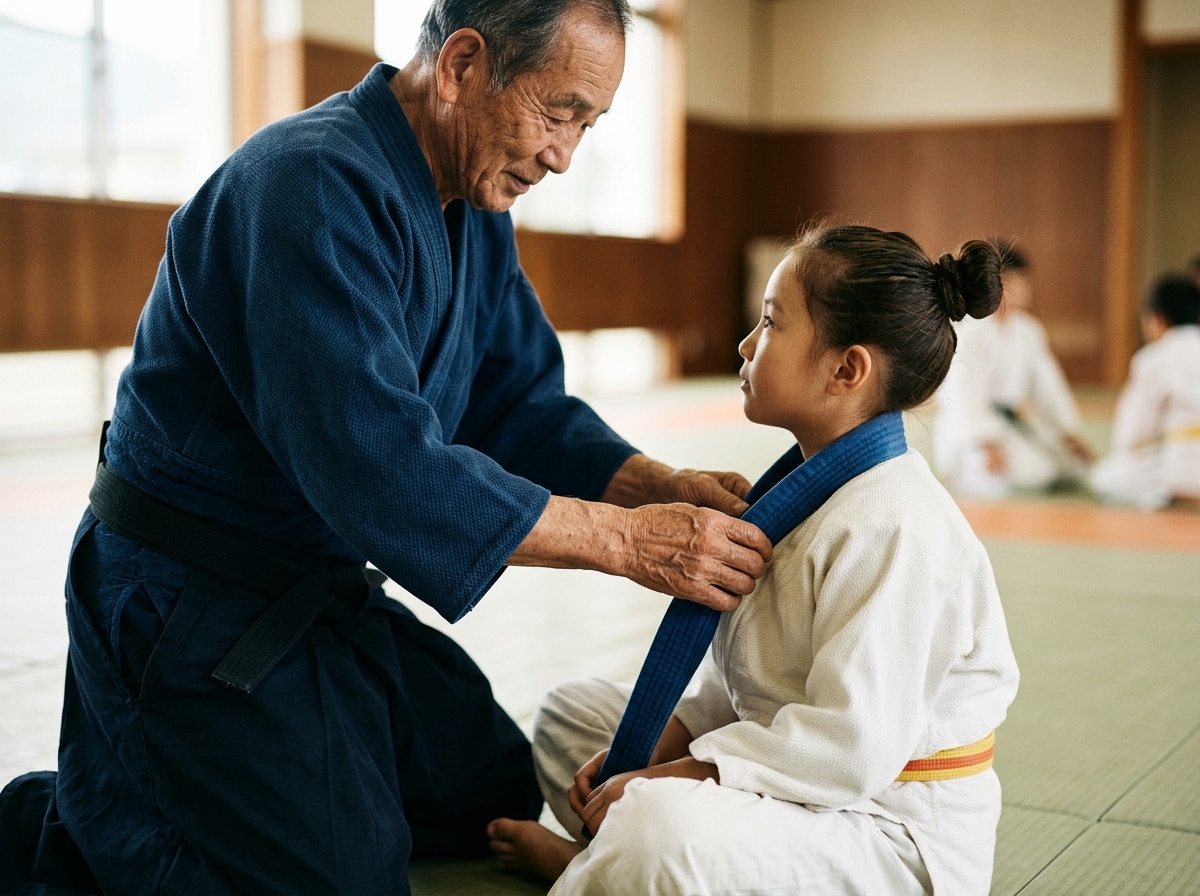
From Maeda to the Mat: A Brief History of Jiu Jitsu's Family Tree
Key Branches: Gracie, Machado, and Fadda Lines
Every family tree needs a root, and this one starts with a Japanese judoka named Mitsuyo Maeda. He traveled to Brazil in the early 1900s and, in a move that changed martial arts forever, taught his art to a young Carlos Gracie. Carlos didn't keep it to himself. He passed what he learned down to his brothers, including a smaller, sicklier sibling named Helio, who couldn't rely on strength or size to make the techniques work.
That limitation turned out to be the whole point. Helio adapted the throws and holds around leverage and timing, and the result is what the world now recognizes as Brazilian Jiu-Jitsu. You can read the full story of that transformation in the gracie spotlight Helio Gracie feature, which digs into how a smaller man built a system that beat bigger, stronger opponents. From there, the art fanned out through the next generation: Carlos Gracie Jr. built Gracie Barra into a global academy, Rolls Gracie blended in wrestling and judo influence, Carlson Gracie produced a legendary run of champions, and Rickson Gracie became known simply as one of the best to ever do it.
But the Gracie household wasn't the only source. Luiz França, another of Maeda's students, taught Oswaldo Fadda, who developed his own line entirely outside Gracie circles, largely among working-class students in Rio who didn't have access to the Gracie academy. Fadda's students famously challenged the Gracies in 1959 and won several matches, proving the art wasn't a single family's property. If you've ever wondered why training partners argue about roots and credibility, why is lineage important in BJJ? is a debate worth sitting in on. Short answer: it's about knowing where your knowledge actually came from.
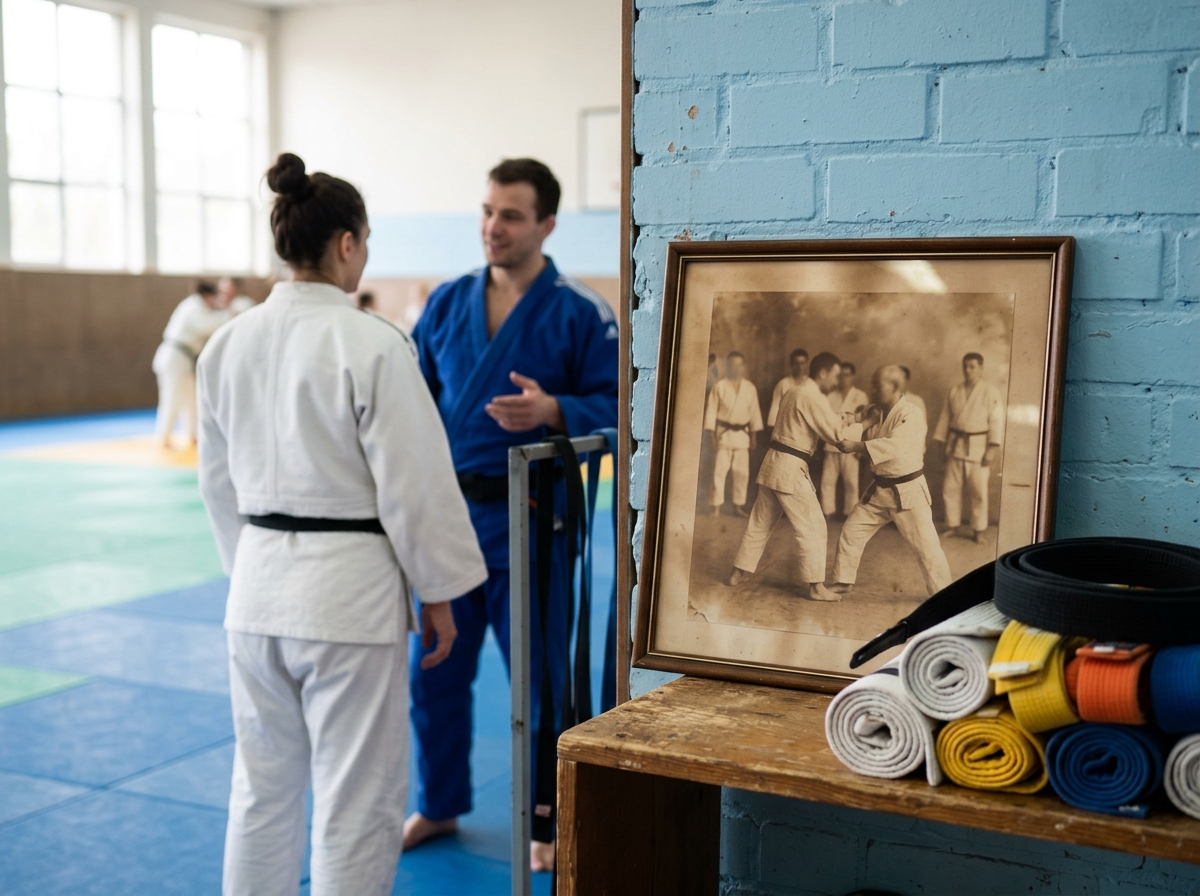
Major Jiu Jitsu Lineage Branches at a Glance
Comparing the Gracie Family Branches
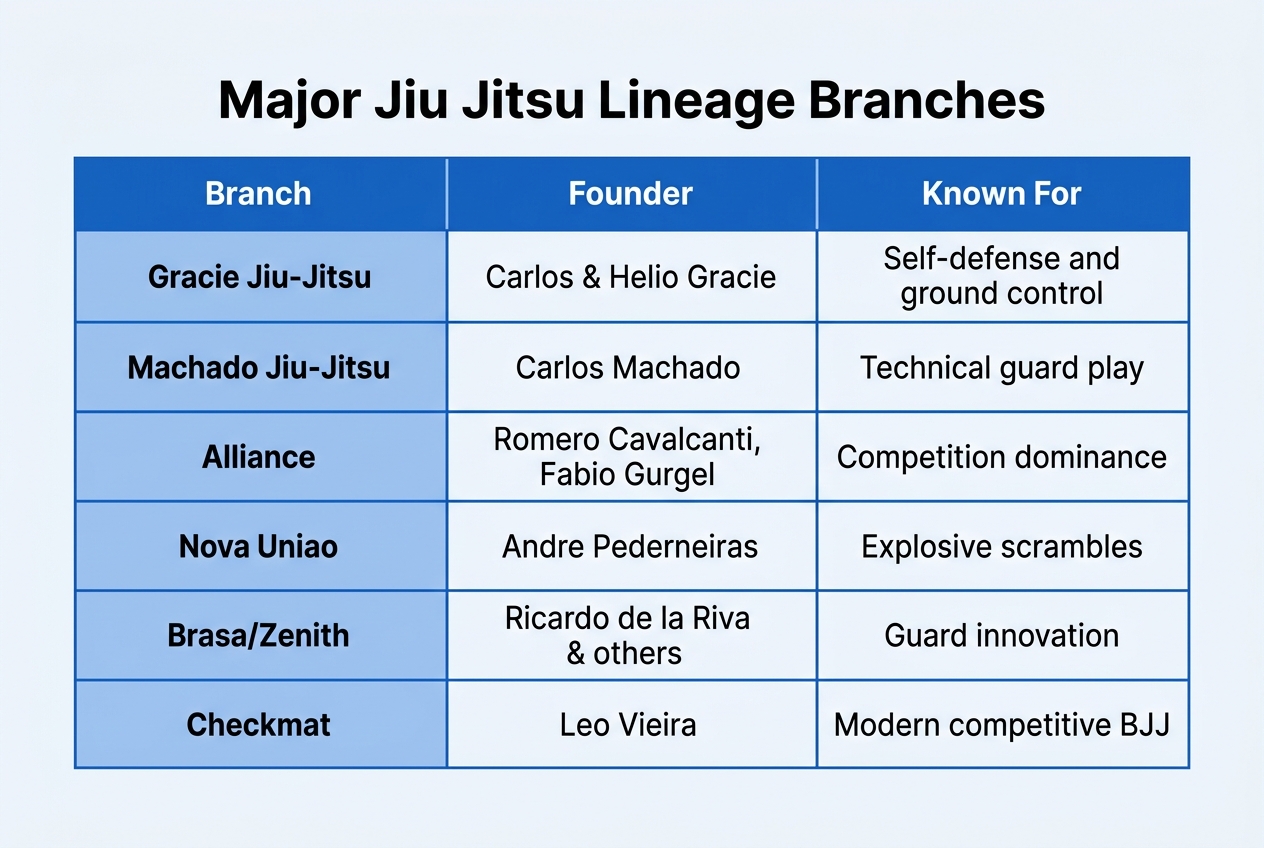
Every black belt's lineage eventually funnels back to the same source, but the branches split off in very different directions. Some stayed close to self-defense roots, others leaned hard into sport competition, and a few grew almost entirely outside the Gracie name. The table below lays out the major branches side by side so you can see where the emphasis actually diverges.
| Branch | Founder / Key Figure | Notable Successors | Emphasis |
|---|---|---|---|
| Maeda Branch | Mitsuyo Maeda | Carlos Gracie (student) | Original judo/jujitsu principles brought from Japan to Brazil |
| Carlos Gracie Branch | Carlos Gracie | Carlson, Rolls, Robson | Family teaching system, foundation for nearly all Gracie lines |
| Helio Gracie Branch | Helio Gracie | Rickson, Royler, Royce, Rorion | Leverage-based self-defense for smaller practitioners |
| Carlson Gracie Branch | Carlson Gracie | Ricardo Liborio, Vitor Belfort | Competition-focused, aggressive top pressure |
| Rickson Gracie Branch | Rickson Gracie | John Danaher (indirect influence) | Invisible jiu-jitsu, connection and efficiency of movement |
| Oswaldo Fadda Branch | Oswaldo Fadda | Monoel dos Reis Costa | Developed independently, strong emphasis on foot locks |
| Royce Gracie | Helio Gracie (student) | — | Validated Helio's lineage by winning early UFC events against much larger opponents |
Notice how the Fadda branch stands apart. It didn't come through Helio or Carlos at all. Fadda actually learned from Luiz França, another Maeda student, which is why you'll sometimes hear people call it the "non-Gracie" branch of legitimate jiu-jitsu. For a deeper look at Maeda's role in all of this, the story of the man who brought jiu jitsu to the world is worth reading in full. And if you want the short version of how every academy today connects back to one root, plenty of practitioners have found that All modern BJJ lineages trace back to the Gracie Academy.… sums it up well. Bottom line: the branch tells you what a school probably values before you ever step on the mat.
Royce Gracie's Place in the Lineage
Why Royce's Wins Mattered for BJJ's Reputation
Royce Gracie is Helio Gracie's son. That's not a footnote — it's the whole point. He sits in the most direct branch of the family tree, trained from childhood by the man who adapted judo into what became modern Brazilian Jiu-Jitsu. When Royce stepped into the octagon at UFC 1 in 1993, he wasn't just a fighter chasing a prize. He was a walking demonstration of a family's life work.
And the demonstration landed. Royce, often the smallest man in the cage, beat boxers, wrestlers, and karate stylists across UFC 1, 2, and 4, submitting most of them with chokes and joint locks few American viewers had ever seen. Those wins did more for BJJ's reputation than decades of quiet academy teaching had managed. Overnight, leverage-based grappling went from a curiosity to a legitimate combat discipline, and gyms across the world started asking who taught this guy.
His academy and rank still carry Helio's specific fingerprint: economy of motion, using an opponent's size against him, control before submission. If you're mapping out where different schools sit relative to each other, a bjj black belt lineage tree makes that inheritance easy to see at a glance. That's also why apparel bearing his name or rank carries weight beyond fashion. It's a nod to a specific, provable heritage, not a generic nod to "tradition."
How to Trace Your Own BJJ Lineage
Tracing your own lineage isn't complicated. It just takes some patience and a bit of detective work. Most black belts know their own promotion chain by heart, so start with the person who knows yours best: your instructor.
- Step 1: Ask your instructor who promoted them to black belt, and get the full name, not just a nickname or gym legend.
- Step 2: Follow that chain back generation by generation, instructor to instructor, until you land on one of the original Gracie or Maeda-era names.
- Step 3: Cross-reference names with known lineage trees or databases to confirm dates and check for gaps or inconsistencies in the story you've been told.
- Step 4: Look for certificates or academy affiliation documentation, since many schools display these on the wall or can produce them on request.
- Step 5: Understand that some lineages blend multiple branches through cross-training, meaning a single black belt might trace back through two or three legitimate paths at once.
Using Online Lineage Trees and Databases
Once you've got names and rough dates, online databases become useful for confirming the story. Several volunteer-run sites catalog thousands of black belt promotions, complete with instructor-student links going back over a century. They're not always perfect. Small academies and older promotions sometimes go unrecorded, but they're a solid gut check. If your instructor's chain doesn't show up anywhere, that's not automatically a red flag. It just means more digging is needed. One practical move: if you're stuck or want a second opinion, you can search or ask the community directly by browsing a thread where practitioners post your lineage for feedback and comparison. People there have untangled some genuinely messy family trees. Worth noting, too, that lineage sites are maintained by hobbyists, not historians on payroll, so treat conflicting entries as a prompt to ask more questions rather than a final verdict.
Does Lineage Actually Matter When Choosing a School?
Pros and Cons of Prioritizing Lineage
A clean lineage tells you a school's black belt didn't just buy a certificate online. It proves someone, somewhere down the chain, actually tested that person's skill under real pressure. That's worth something. But pedigree isn't a teaching license. Plenty of decorated competitors make poor instructors, and plenty of lesser-known blue-chain academies produce sharp, technical students year after year. A thread on the topic asks how important black belt lineage really is, and the honest answer floating through most responses is: less than you'd think, more than zero.
Better Ways to Evaluate a Potential Academy
Prestige tells you where a coach came from. Practical instruction tells you what you'll actually leave with after a year of showing up. Those aren't the same thing. Confusing them is how people end up loyal to a patch instead of a program. Before signing anything, run the school through a short checklist. It takes one visit to spot most red flags.
| Evaluation Method | What It Reveals | How To Check It |
|---|---|---|
| Observe a live class | Teaching style, class size, injury rate | Ask to watch or try a free trial session |
| Check if the coach still rolls | Whether skills stay sharp, not just theoretical | Show up on sparring night, not just a demo |
| Look at competition results | Real-world pressure testing of the curriculum | Search team results on Smoothcomp or BJJ Heroes |
| Talk to current students | Retention, culture, honest satisfaction | Ask a few white and blue belts privately |
| Review lineage documentation | Historical legitimacy of the black belt | Ask directly; a confident coach won't dodge it |
None of this means tradition is worthless. Respect the family tree, but verify it against what actually happens on the mats. A famous last name on the wall means nothing if the coach hasn't drilled in years. Balance the two, and you'll pick a school for the right reasons.
Wearing Your Lineage: Honoring BJJ Heritage On and Off the Mat
Everyday Apparel That Reflects Belt Rank and Family Ties
Walk into any academy and you'll see it before you see a single roll: patches on gi lapels, rank bars stitched into belts, hoodies with a coach's name across the chest. Clothing has always been part of how this sport tells its story. It's not vanity. It's a quiet way of saying who taught you, and who taught them. Lineage gets worn as much as it gets talked about.
Belt progression itself shows up constantly in branded gear, even off the mat. A white belt might wear a school tee to class. A purple or brown belt often picks up rank-specific merchandise once they've put in real years. Fans do this too, even without ever training a day, because resources like a detailed breakdown of how belts and academy roots evolved over generations help them understand what they're actually representing when they throw on that shirt.
People express that connection in a handful of concrete ways:
- Everyday tees printed with an academy crest or a founder's name, worn as a low-key nod to where someone trains.
- Hoodies referencing rank or achievement, meant for cold mornings before class rather than competition mats.
- Patches sewn onto gis or bags that trace back to a specific school or lineage branch.
- Youth-sized gear that lets kids of practitioners represent the family's training history early on.
- Limited-run apparel tied to a notable figure, often collected by longtime fans as much as students.
None of this replaces mat time. But it's a fair, honest way to carry your training identity into daily life.
If tracing this lineage has left you wanting to represent it yourself, Royce Gracie Lifestyle offers apparel that connects directly back to the source, from the Helio Gracie Lineage Tee to the Royce Gracie Rank Hoodie, with pieces for both adults and kids. Every order ships with free standard shipping and returns, so there's no risk in bringing a piece of this history into your own closet. Visit the shop today and wear a story that's still being written.