

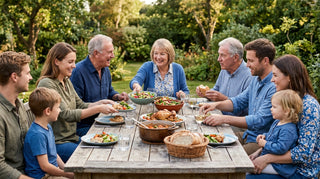
You've watched the rolls, studied the technique, maybe even tried to copy the training split—but something's still missing from your progress. Here's the truth: what fuels a Gracie matters as much as what they drill on the mats. The diet Gracie family has followed for generations isn't a fad. It's a functional system built for longevity, strength, and clarity under pressure. Here's what actually goes on their plates, and why it works.
What Is the Diet Gracie Family Built Their Legacy On
Carlos Gracie Sr. and the Birth of a Nutrition System
Long before sports science had labs and lactate tests, Carlos Gracie Sr. was already experimenting on himself and his students. He believed fighting technique alone couldn't build a dominant martial artist. The body had to be fueled correctly too. Working through decades of trial and error in Brazil, he developed what became known simply as the Gracie Diet, a system built specifically for the demands of grappling. It wasn't borrowed from a textbook. It was built mat-side, fight by fight.
Carlos treated eating habits with the same seriousness he gave to technique, and that discipline is well documented in the man who brought jiu jitsu to the world. He passed the framework down through his sons, including Helio, who refined it further as his own training evolved. Generations later, family members still teach and write about it. Anyone curious can find a detailed modern breakdown of the Gracie Diet - Rilion Gracie | Jiu approach online. The point was never trendiness. It was survival at the highest level of competition.
Why Food Combining Became Central to Gracie Training
Here's the part that surprises people: there's no calorie math involved at all. Carlos built his system around food combining, the idea that certain foods digest well together while others fight each other in the stomach. Proteins, starches, and fruits were carefully separated across meals. Not because of trendy science, but because Carlos noticed fighters felt sluggish and bloated when they weren't. Digestion, he figured, was wasted energy that could otherwise go toward training or recovery.
Reducing inflammation was the other piece of the puzzle. Sore joints and puffy tissue don't mix well with hours of live rolling. By avoiding poor food pairings, the theory goes, the gut stays calmer and the body recovers faster between sessions. Some of it holds up under modern nutrition scrutiny. Some of it is more folklore than science. Either way, it worked well enough for a family that dominated for generations.
None of this existed in isolation from training itself. Eating this way was treated as an extension of discipline on the mat, not a separate lifestyle choice bolted on afterward. That's really the whole Gracie philosophy in a nutshell: mind, body, and plate all pulling in the same direction.
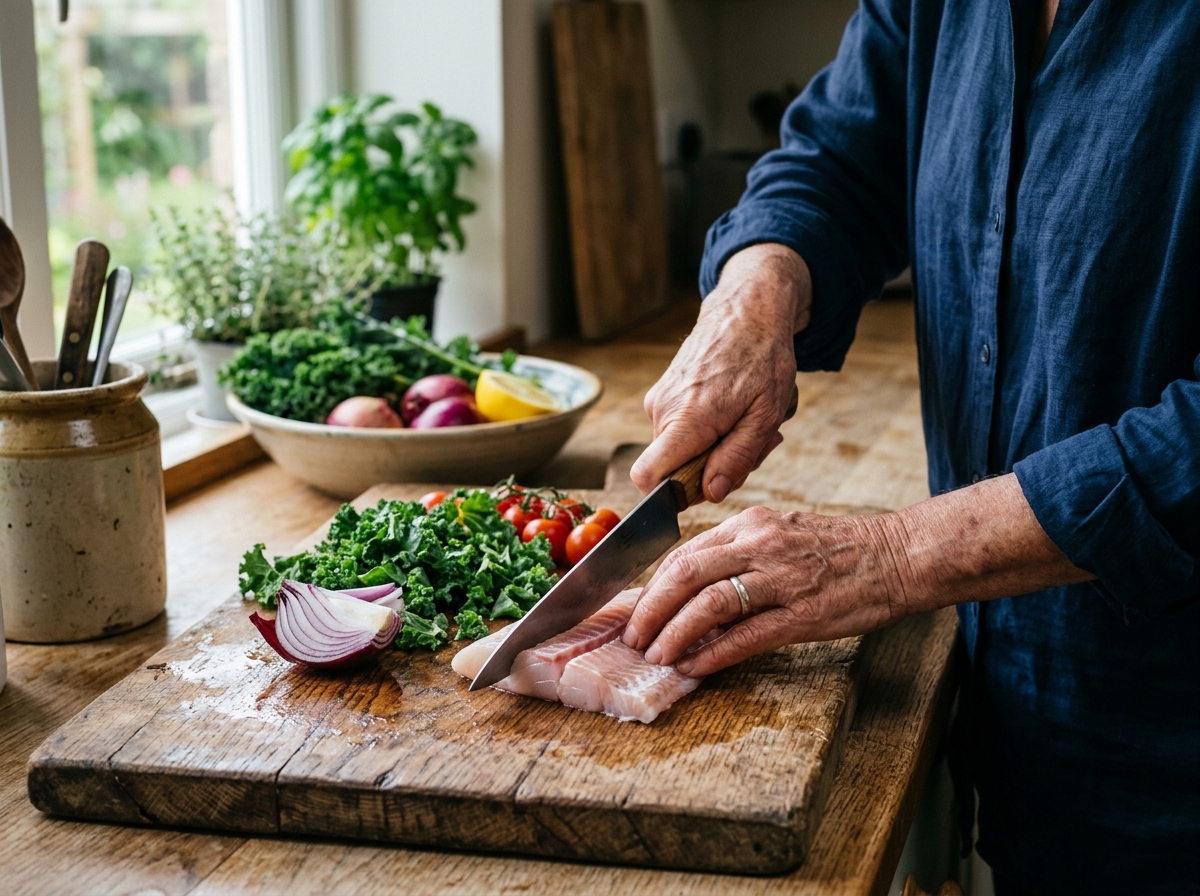
The Core Food Groups That Structure the Plan
How the Food Tables Work Together
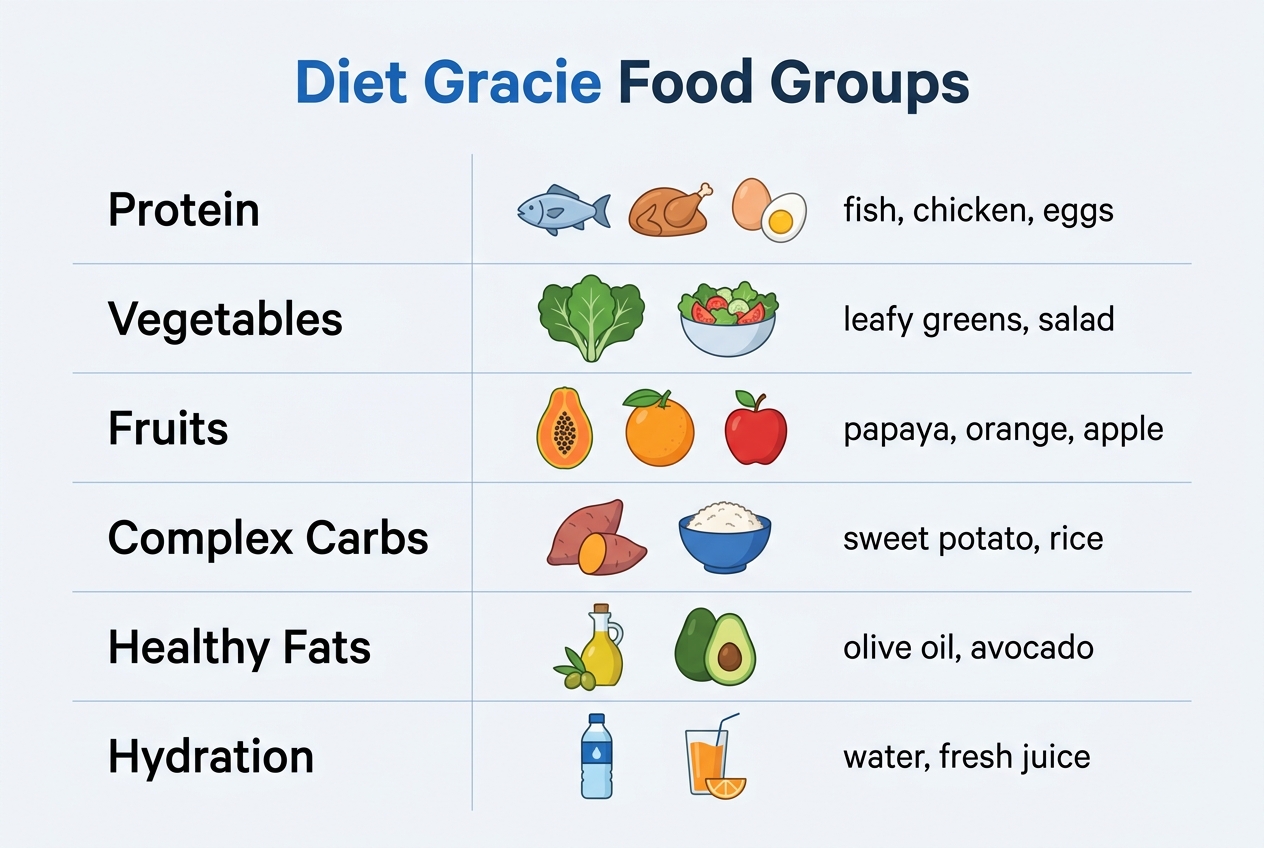
The classic version of this eating system sorts foods into six tables, labeled A through F, each with its own combining rules. Proteins live separately from starches. Fruits get their own time slots. Neutral foods, things like leafy greens and certain vegetables, act as the glue that can sit alongside almost anything else on your plate. It sounds rigid on paper. In practice, most people just memorize a handful of pairings and build meals around them.
Here's a simplified breakdown of how the major tables are typically organized and what they're meant to be eaten with.
| Table | Food Type | Examples | Combine With |
|---|---|---|---|
| A | Animal Proteins | beef, chicken, fish | neutral vegetables only |
| B | Starches | rice, potatoes, bread | neutral vegetables only |
| C | Acidic Fruits | orange, pineapple, lemon | eaten alone, separate meal |
| D | Sweet Fruits | banana, mango, fig | eaten alone, separate meal |
| E | Neutral Foods | lettuce, cucumber, olive oil | tables A, B, C, or D |
The logic behind all this comes down to digestion speed. Proteins need an acidic stomach environment to break down properly, while starches need something closer to alkaline. Mix the two, the theory goes, and you slow everything down, leaving food to ferment rather than digest cleanly. Whether or not you buy the biochemistry, the practical effect is simpler meals with less bloating for a lot of practitioners. If you're curious how nutrition habits like this show up elsewhere in grappling circles, it's worth noting how the well-documented Renzo Gracie Diet follows a similar food-separation logic, just with its own tweaks. Fruit, notably, never gets combined with anything. It's meant to be its own meal, eaten on an empty stomach, usually first thing in the morning.
Core Principles Behind the Approach
Why These Rules Exist
Strip away the folklore and the plan comes down to a handful of stubborn habits. Each one traces back to Rorion Gracie's belief that digestion, not just training volume, decides how you perform on the mat. That history gets its full due in the gracie spotlight rorion gracie write-up, but the short version is this: food combining was treated as seriously as technique drilling.
Here's what actually governs a meal under this system:
- Starches and proteins are never plated together, since the family believed the two require conflicting digestive environments and compete for enzymes, slowing everything down.
- Fruit gets eaten alone, on an empty stomach, because mixing it with heavier food supposedly causes fermentation instead of clean digestion.
- Meals lean almost entirely on whole, unprocessed ingredients — think vegetables, lean meats, and simple grains rather than anything packaged or refined.
- Eating happens slowly, with a firm rule to stop at roughly 80% full instead of pushing to that stuffed, sluggish feeling.
- Meal times stay consistent day to day, on the theory that a predictable schedule trains your gut the same way repetition trains a technique.
None of this is exotic. It's closer to old-school folk wisdom dressed up in family branding. That said, plenty of practitioners swear the rules made rolling feel lighter, and just as many nutritionists roll their eyes at the science. That skepticism isn't fringe, either. A widely shared Gracie Diet Sucks... critique lays out the case against food combining in blunt terms. Worth hearing both sides before you commit.
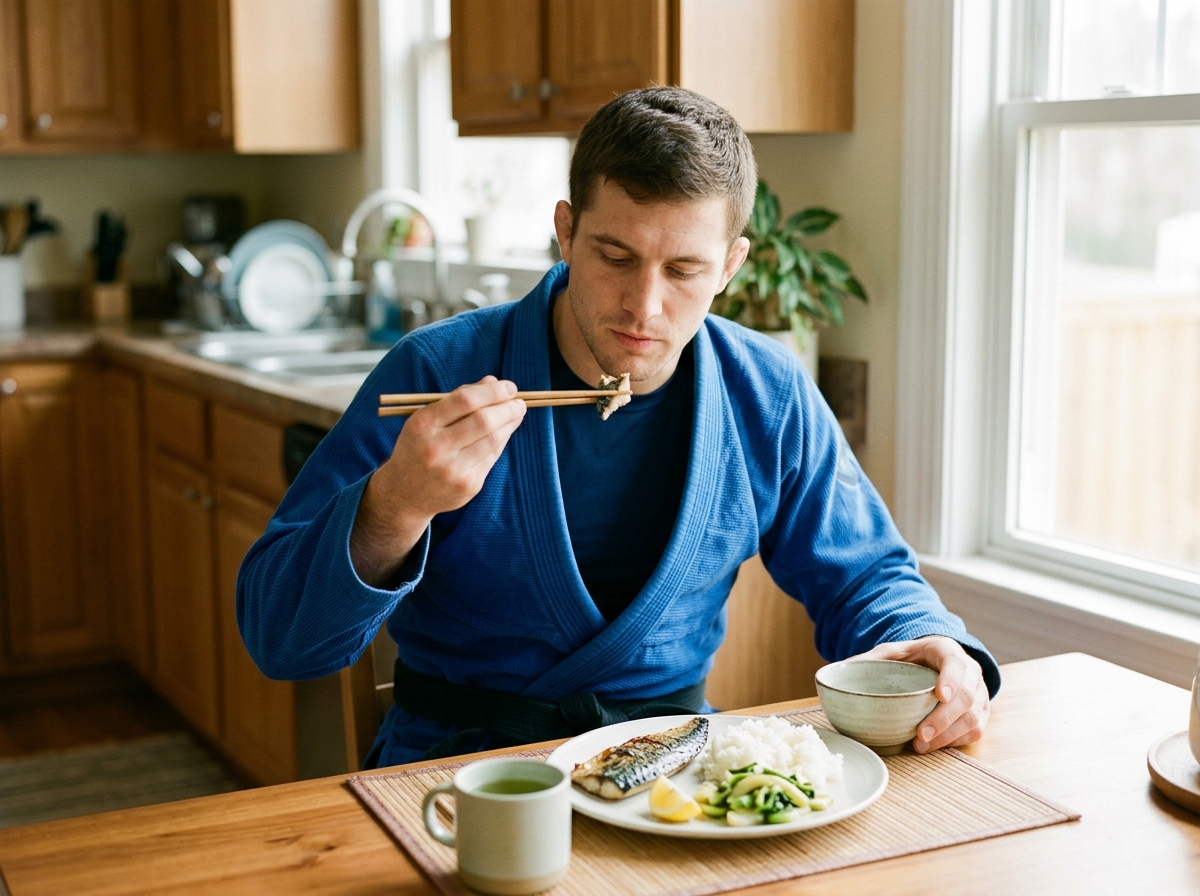
Health and Performance Benefits Reported by Practitioners
What Athletes and Coaches Say About Results
Ask around any academy that follows food combining rules and you'll hear the same thing: less bloating, fewer stomach cramps mid-roll. That's not a small thing when you're training twice a day. Grapplers who switched away from mixing heavy starches with proteins in one sitting often report their stomachs feel calmer during live sparring, which matters when your opponent is putting weight on your diaphragm. Digestion, it turns out, affects your guard retention more than people realize.
Energy is the other big theme. Athletes describe steadier output through long rounds instead of the spike-and-crash pattern that comes from sugar-heavy pre-training meals. Coaches who've studied the Gracie Diet point to its emphasis on food pairing as the reason competitors feel fueled without the sluggishness that follows a big mixed plate of rice, beans, and meat eaten together. A few competitors have compared the effect to what they'd expect from a controlled carb-cycling plan, minus the complexity.
Weight management comes up constantly, too, especially among fighters cutting for a specific bracket. The approach doesn't demand starvation or extreme cutting. Instead, athletes describe gradual, sustainable weight control that lets them stay near fighting weight year-round. That's a far cry from the last-minute water cuts still common in combat sports.
Family members and academy athletes offer some of the most convincing testimony, informal as it is. Multiple generations have credited the eating pattern with keeping them lean and sharp well past the age most fighters retire. One black belt instructor put it bluntly: he felt "lighter on his feet" within weeks of adjusting his meal combinations. Take it as anecdote, not clinical proof. But decades of consistent stories from people who train for a living carry some weight.
Comparing the Gracie Diet to Other Athletic Eating Plans
Most modern athletic eating plans revolve around numbers. Macro-based diets ask you to hit a gram target for protein, carbs, and fat every day. The food-combining approach behind the Gracie plan skips the math entirely and focuses on which foods sit well together at a given meal. That's a fundamentally different mindset, and it's worth seeing how it stacks up against the eating styles most grapplers have already tried.
Pros and Cons at a Glance
Keto chases ketosis through near-zero carbs. Paleo cuts out grains and processed food entirely. Intermittent fasting controls when you eat rather than what. Food combining does neither. It lets you eat carbs and produce freely, just not stacked with heavy proteins at the same sitting. Here's a quick side-by-side.
| Approach | Main Rule | Tracking Required | Best Fit For |
|---|---|---|---|
| Gracie (food combining) | Separate proteins, starches, and fruit | Low — no counting | Grapplers wanting simple meal structure |
| Macro-based dieting | Hit daily gram targets | High — every meal logged | Bodybuilders, weight-class competitors |
| Keto | Under 50g carbs daily | Moderate to high | Endurance athletes chasing fat adaptation |
| Paleo | No grains, dairy, or processed food | Low to moderate | Athletes prioritizing whole foods |
| Intermittent fasting | Eat within a set window | Low — timing only | Those managing weight without cutting foods |
The appeal of the Gracie approach is simplicity. There's no app, no scale, no spreadsheet. You just learn a handful of combining rules and apply them. The downside is honest, too: there's limited peer-reviewed research backing food combining specifically, and much of the support is anecdotal, passed down through generations of practitioners rather than published in journals. Curious what real grapplers think? A long-running community discussion on training nutrition shows opinions are genuinely split. If you want data-driven precision, macros win. If you want something sustainable and low-fuss, this old-school method still holds up.
Practical Steps to Try the Gracie Diet Yourself
Reading about food combining is one thing. Actually doing it is another. If you want to test this approach without turning your kitchen into a lab, start small and build from there. The goal isn't perfection in week one. It's noticing what changes when you eat differently.
A Sample Day of Eating, Gracie Style
Breakfast could be a bowl of melon or papaya, eaten alone and away from your next meal by at least an hour. Lunch might be grilled fish with a big salad and steamed vegetables, skipping the rice or bread entirely. Dinner leans similar: a protein, non-starchy vegetables, maybe a small sweet potato if you trained hard that day. No fruit juice with meals, no dessert stacked on top of a starch-heavy plate. It's simple food, prepared plainly, eaten with some intention behind the order and timing.
Anyone curious about the deeper reasoning behind these food pairings can find a fairly thorough breakdown in this complete guide to understanding and applying it day to day. That's a good companion read once you've got the basics down. Here's how to actually start, step by step:
- Begin by separating fruit meals from main meals, giving your body a clear window to digest sugars before introducing protein or starch.
- Gradually eliminate starch-protein combinations, like bread with meat or pasta with chicken, since the Gracie approach treats this pairing as the main source of sluggish digestion.
- Build a simple weekly grocery list around whole foods — fish, eggs, leafy greens, root vegetables, and seasonal fruit — so you're not improvising every meal.
- Track energy and digestion changes over two to three weeks, since one good day tells you nothing and three weeks gives real signal.
- Adjust portions based on training intensity, eating more starch on heavy grappling days and lighter on rest days.
Keep a short daily note on how you feel. Bloated, sharp, tired, focused — whatever it is. Patterns matter more than any single meal. Give it three weeks before deciding it's not for you.
How Nutrition Fits Into the Broader Gracie Family Legacy
From Kitchen Discipline to Mat Discipline
Jiu-Jitsu was never just a fighting style for the Gracies. It was a full way of living. What you ate mattered as much as how you rolled, because a body run on poor fuel breaks down before the mind ever taps out. That's the thread connecting the dinner table to the mat: discipline doesn't clock out. Training six days a week means nothing if the other eighteen hours of your day undo the work.
Carlos Gracie built his eating framework after studying how certain food combinations left him sluggish, bloated, or sharp and clear-headed. The details of that framework live outside this section, but the instinct behind it — treat the body as a system worth studying — is pure Gracie. His nephew Helio, frail and sickly as a teenager, leaned on that same instinct to survive and eventually thrive in a sport built for bigger men. Their health struggles weren't a footnote. They were the spark for a lifestyle philosophy that outlived them both, and it's laid out in detail in the Gracie Diet book Rorion later published.
Royce Gracie carried that same mindset into the octagon at UFC 1, 2, and 4, beating bigger opponents through patience and conditioning rather than brute strength. That kind of composure under pressure doesn't come from talent alone. It comes from years of small, boring, repeated choices — what you eat, when you rest, how you recover. Skip that groundwork and technique alone won't save you.
From Kitchen Discipline to Mat Discipline
Modern practitioners honor that legacy in smaller, practical ways. Many track meals with apps like MyFitnessPal or Cronometer, echoing the Gracie habit of paying close attention to what fuels a hard training session. Others simplify things by meal-prepping the way old-school competitors once did with rice, beans, and lean protein. It's not about copying a decades-old menu exactly. It's about keeping the same watchful attitude toward the body.
Gear plays a quiet role too. Breathable, moisture-wicking training wear, a solid gi bag, proper mouthguards — none of it replaces good nutrition, but it supports the same daily commitment. Consistency shows up everywhere, from the plate to the gym bag. Many local businesses now sell recovery tools like foam rollers and compression sleeves that fit this same philosophy of treating training as a full lifestyle, not just an hour on the mat.
Fueling your training is only half the equation—looking and feeling like part of the Gracie legacy matters too, and that's where Royce Gracie Lifestyle comes in. From the Helio Gracie Lineage Tee to the Signature Hoodie, every piece connects you to authentic Jiu-Jitsu heritage, backed by free standard shipping and returns on all orders so you can shop with confidence. Explore the collection today and wear your discipline on and off the mat.